
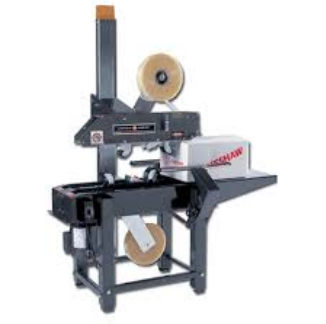
Loveshaw Little David Tape Machine and Industrial Components Guide
The tape machines are widely used industrial packaging systems that automate the sealing of corrugated boxes with pressure-sensitive tape. One of these is the Loveshaw Little David tape machine, these are part of end-of-line packaging systems that help manufacturers improve efficiency, reduce manual labor, and ensure consistent sealing quality across high-volume production environments. Originally developed in the 1960s, the Little David line has evolved into a key solution for automated case sealing in industries such as food, beverage, healthcare, and consumer goods.
It typically applies tape to both the top and bottom seams of a carton, ensuring secure closure during storage and transport. These systems are engineered to handle different box sizes, production speeds, and packaging requirements, making them suitable for both small and large-scale operations.
Evolution and Purpose of Case Sealing Technology
Case sealing technology was developed to streamline packaging processes that were previously done manually. Early systems relied on gummed tape, but modern machines use pressure-sensitive tape for faster, cleaner sealing. The introduction of automated case sealers like Little David allowed even smaller manufacturers to adopt automation in their packaging lines.
The primary purpose of these machines is to increase productivity while maintaining packaging consistency. Instead of relying on manual taping, which can vary in quality and speed, automated systems ensure every box is sealed uniformly, reducing errors and product damage during shipping.
How a Loveshaw Little David Tape Machine Works
A typical system operates by guiding a corrugated box through a conveyor or belt-driven mechanism. As the box enters the machine, it is aligned using side rails before reaching the tape heads. These tape cartridges apply adhesive tape to the top and bottom center seams of the box in a continuous motion.
The process generally includes:
- Box entry and alignment using adjustable guides
- Compression of flaps to ensure a proper sealing surface
- Application of tape using upper and lower tape heads
- Discharge of the sealed box for further handling
Importance of Machine Components in Performance
The efficiency of this depends heavily on its internal structure and mechanical integrity.
Key machine components include:
1. Drive and Conveyor Systems
These include belts, motors, and shafts that move boxes through the machine. They ensure consistent speed and alignment during sealing.
2. Tape Head Assemblies
The tape head is the most critical component, responsible for dispensing and cutting tape accurately. It must be maintained regularly to avoid misalignment or tape wastage.
3. Frame and Structural Parts
Heavy-duty steel frames provide stability and durability, allowing machines to operate continuously in industrial environments.
4. Sensors and Electrical Systems
Modern machines use sensors to detect box position and ensure precise tape application. Electrical systems control motor speed and automation functions.
5. Wear-and-Tear Parts
Rollers, belts, and cutting blades are subject to frequent wear and require periodic replacement to maintain efficiency.
Industrial Applications and Benefits
The Loveshaw Little David system is commonly used in logistics centers, manufacturing plants, and distribution warehouses. Its ability to handle varying box sizes and high-speed sealing makes it essential in modern supply chains.
Benefits include:
- Reduced labor costs through automation
- Increased packaging speed and throughput
- Improved sealing consistency and product protection
- Reduced material waste from manual errors
Maintenance and Operational Efficiency
Regular maintenance is essential for keeping the system running efficiently. This includes cleaning tape heads, inspecting belts, checking sensors, and replacing worn-out parts. Preventive maintenance helps avoid unexpected breakdowns and ensures consistent output quality.
Conclusion
The loveshaw little david tape machine represents a significant advancement in automated packaging technology, offering reliability and efficiency in high-volume environments. By integrating precision engineering and durable construction, it has become a standard solution for industrial case sealing.
Understanding the importance of machine components helps operators maintain system efficiency and reduce downtime. As packaging demands continue to grow across industries, automated sealing systems remain essential for ensuring speed, consistency, and operational reliability in modern supply chains.