
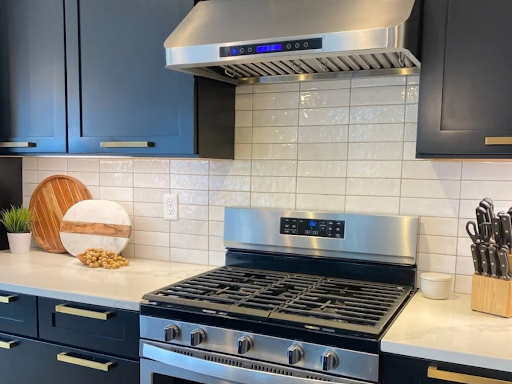
How Under-Cabinet Recirculating Range Hoods Work?
Kitchen ventilation plays a major role in maintaining indoor air quality, especially during frequent cooking. In many homes where external ducting is not possible, alternative ventilation solutions become necessary. One widely used option is the under-cabinet range hood, which is designed to filter and clean air before releasing it back into the kitchen.
In modern kitchen setups, especially compact or apartment-style layouts, the under-cabinet recirculating range hood offers a practical solution without requiring major structural changes. It works efficiently in environments where traditional ducted systems are not feasible.
What is an under-cabinet recirculating range hood?
A under cabinet recirculating range hood is installed beneath kitchen cabinets and operates without venting air outside. Instead, it draws in cooking fumes, filters them through internal systems, and releases cleaner air back into the kitchen space.
This system typically uses grease filters and charcoal filters to trap airborne particles, smoke, and odors. Unlike ducted systems, it relies entirely on filtration, making it suitable for kitchens with limited installation options.
A key internal component often used in such systems is a kitchen hood vent insert, which helps manage airflow and supports effective filtration within the hood structure.
How does it work in Everyday Use?
The working process of a under cabinet recirculating range hood is relatively simple but effective:
When cooking begins, the hood fan pulls rising air upward. This air passes through metal grease filters that capture oil and food particles. After that, it moves through charcoal filters that help reduce odors and smoke. Finally, the cleaned air is released back into the kitchen.
Because the air is not expelled outside, the system continuously recycles indoor air after filtering it. The effectiveness depends largely on filter quality and regular maintenance of components like the kitchen hood vent insert, which supports airflow direction and filtration efficiency.
Key Benefits of This Ventilation System
One of the main advantages of a under cabinet recirculating range hood is its flexibility in installation. It does not require ductwork, making it suitable for older homes, apartments, and kitchens where exterior ventilation is not possible.
It also helps save space since it is mounted under cabinets without altering the kitchen layout. This makes it a practical choice for compact kitchens.
Another benefit is cost efficiency. Since no external venting system is needed, installation tends to be simpler and less expensive compared to ducted alternatives.
Limitations to Be Aware Of
While a under cabinet recirculating range hood is useful in many situations, it does have certain limitations. Since it does not remove air outside, it may not be as effective in removing heat or strong cooking odors compared to ducted systems.
Additionally, filter maintenance is essential. Grease and charcoal filters need regular cleaning or replacement to maintain performance. If neglected, airflow efficiency can decrease over time.
Even with advanced internal parts like a kitchen hood vent insert, overall performance still depends on upkeep and proper usage.
Maintenance and Efficiency Tips
To keep a under cabinet recirculating range hood working efficiently, routine care is important. Grease filters should be cleaned regularly to prevent buildup, while charcoal filters should be replaced as recommended by the manufacturer.
It is also important to ensure that airflow is not blocked and that internal components remain clean. Proper maintenance of parts such as the kitchen hood vent insert helps maintain consistent performance and improves air quality in the kitchen.
Conclusion
An under-cabinet range hood is a practical solution for kitchens without ducting, helping to filter smoke and odors effectively. A kitchen hood vent insert supports improved airflow and filtration in such systems. It is ideal for compact spaces and easy installations. Proper maintenance ensures long-term performance and efficiency.