
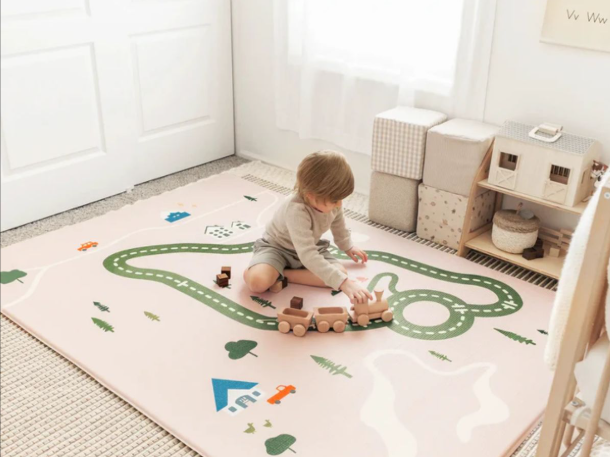
Baby Play Mat: Choosing Safe, Comfortable Play Spaces for Babies and Toddlers
A quality baby play mat creates a safe, comfortable, dedicated space where babies and toddlers can explore, play, and develop motor skills. The right play mat supports tummy time, rolling, crawling, and eventually walking, providing both cushioning and a clean surface that protects children from harder flooring. Understanding what makes a quality product helps parents choose options that support development safely while fitting naturally into home design. The baby play mat category has grown significantly in recent years, and the range of available products now spans everything from basic foam squares to premium designer pieces.
What Play Mats Actually Support
Play mats provide cushioning that reduces impact from typical baby movements: rolling off during tummy time, tipping from a sitting position, and falling during early walking attempts. They provide a clean barrier between babies and household floors that see more foot traffic than most parents realize. They define a dedicated play space that helps contain toys and makes cleanup easier. Quality mats support developmental milestones from newborn tummy time through toddler floor play, providing a single surface that works across many months of rapidly changing child activities.
Material Safety
Baby products require careful attention to material safety because infants spend so much time in direct contact with them. Look for mats certified free of BPA, phthalates, lead, formaldehyde, and other common concerns documented in baby product testing. Food-grade TPU, XPE foam, and natural rubber are among the safer material categories available in the current market. Avoid cheap PVC products that may off-gas concerning chemicals over time. Any baby play mat worth buying should come with clear documentation of independent safety testing from reputable organizations, not just manufacturer claims without supporting evidence.
Size and Thickness
Larger mats accommodate growing children better than tiny mats that become useless within months of purchase. Look for at least four to six feet in each dimension for usable play space across tummy time, sitting play, and early crawling. Thickness matters for cushioning: half an inch minimum for infant use, thicker for crawling and walking toddlers who fall with more force. Thicker mats also provide better sound dampening on hard floors and better insulation from cold surfaces during play on tile or hardwood flooring during cooler months of the year.
Cleaning and Hygiene
Babies drool, spill, and occasionally worse than that. Mats must be easy to clean thoroughly and repeatedly without losing their surface quality. Wipeable surfaces that can be sanitized without damage work best for daily cleaning between more thorough weekly cleanings. Some mats feature removable machine-washable covers for deeper cleaning when needed. Avoid textured surfaces that trap crumbs and bacteria in crevices where no amount of wiping will reliably reach. A quality baby play mat that can be kept genuinely clean stays in daily use, while one that becomes hard to sanitize gets put away sooner than it should.
Aesthetic Options for Home Design
Play mats increasingly come in designs that fit naturally into modern home aesthetics rather than screaming ‘baby product’ in every room of the house. Neutral colors, subtle patterns, and natural material looks help mats blend with living room or family room decor. Reversible designs offer two different looks from a single product for parents who want visual variety. Choosing mats that parents actually like looking at means the mat stays in daily use in the main living areas of the home rather than getting hidden away in a playroom nobody visits.
Durability and Long-Term Value
Quality mats that survive the full baby and toddler years represent better long-term value than budget products that need replacement every six months. Look for reinforced edges, quality stitching where applicable, and material thickness that will not compress permanently under years of daily use. A well-chosen baby play mat often survives multiple children and becomes part of the regular household rotation for years of service across growing families. The price premium for quality construction pays back repeatedly through extended service life compared to cheap alternatives.
Choosing Patterns Your Child Will Grow With
Age-specific patterns can feel cute for infants but look out of place within a year or two as the child grows. Timeless designs with simple patterns, natural colors, or abstract graphics work better across childhood than highly thematic products tied to specific infant stages. Parents who choose thoughtfully see their original mat purchase continue serving the family long past the point where theme-specific products would have been retired. This longer useful life is one of the quieter but most meaningful benefits of buying carefully from the start.
Final Thoughts
For parents researching options and exploring nursery furniture & baby products from specialty retailers who prioritize safety certifications, thoughtful design, and long-term durability, working with a retailer that curates carefully across the full baby product category ensures access to mats and related products that parents can feel genuinely confident about using in their homes every day.