
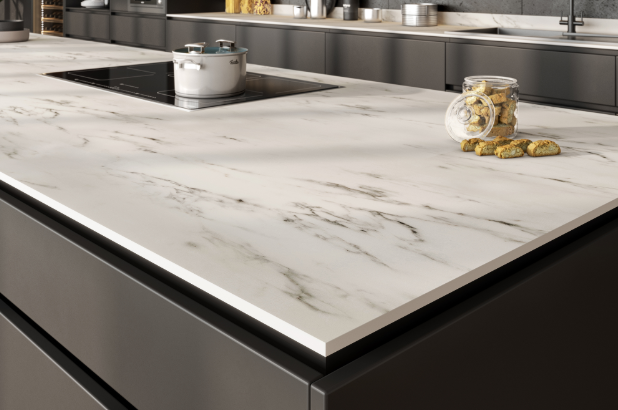
Why Marble Effect Quartz Is Trending
Modern kitchens are no longer designed around functionality alone. Homeowners now want surfaces that combine elegance, durability, and practicality without creating long-term maintenance challenges. This growing demand has made quartz one of the most preferred worktop materials in contemporary interiors, especially in styles that imitate natural marble.
Today, the marble effect quartz worktop has become a popular choice for kitchens, bathrooms, and commercial interiors because it delivers the luxurious appearance of marble while offering greater durability and lower maintenance requirements. With realistic veining patterns, polished finishes, and consistent color tones, these engineered surfaces are transforming modern interior design across the UK.
What Makes Marble Effect Quartz Different
Unlike natural marble, quartz worktops are engineered surfaces made by combining crushed natural quartz with resins and pigments. This manufacturing process creates a non-porous, highly durable surface that closely replicates the visual appeal of marble while improving resistance to stains and scratches.
A major reason homeowners choose a marble effect quartz worktop is its ability to mimic premium marble patterns such as Carrara, Calacatta, and Statuario without the heavy upkeep associated with natural stone. Quartz surfaces also provide a more uniform appearance, which many homeowners prefer for modern kitchen aesthetics.
Popular Marble-Inspired Quartz Designs
The market now offers a wide variety of marble-inspired quartz slabs featuring soft grey veins, dramatic gold streaks, and bold contrasting patterns. Collections commonly include:
- Carrara-inspired white quartz
- Calacatta-style bold veining
- Statuario marble patterns
- Grey marble-inspired surfaces
- Black marble effect quartz
Quartz Supply’s classic range includes multiple marble-look styles such as Carrara White, Calacatta Vegle, Statuario Vegle, Monaco Quartz, and Moderna Gold, highlighting the growing demand for luxury-inspired engineered stone surfaces.
Why Quartz Works Well in Kitchens
One of the strongest advantages of quartz is its non-porous surface structure. Unlike natural marble, quartz does not require frequent sealing because it resists moisture absorption, bacterial growth, and staining more effectively.
This makes a marble effect quartz worktop especially practical for busy kitchens where spills, food preparation, and heavy daily usage are common. Quartz surfaces are also easier to clean because liquids remain on the surface rather than penetrating the material.
Homeowners also appreciate the balance between luxury appearance and low maintenance. Simple soap-and-water cleaning is usually enough to maintain the polished finish for years.
Durability and Everyday Performance
Quartz is widely recognized for its strength and structural consistency. Because engineered quartz combines natural stone particles with resin binders, the surface becomes highly resistant to scratches, chips, and surface wear under normal residential usage.
Industry discussions frequently highlight quartz’s ability to maintain its structure while supporting heavy kitchen use and modern open-plan layouts.
However, despite its durability, quartz still requires reasonable care. Direct heat exposure from hot cookware may damage resin components over time, so using trivets or heat pads is generally recommended.
Design Flexibility in Modern Interiors
A major advantage of quartz is its design versatility. Marble-inspired quartz slabs complement both classic and modern kitchens because they pair well with:
- Matte cabinetry
- Wood finishes
- Metallic fixtures
- Minimalist interiors
- Contemporary open-plan spaces
Finish options also play an important role in appearance. Gloss finishes create brighter reflective surfaces, while matte textures deliver a softer and more natural aesthetic. Designers increasingly prefer balanced finishes that combine practicality with understated luxury.
Important Safety Considerations
As quartz popularity increases, proper fabrication safety has become an important industry topic. Cutting engineered quartz produces silica dust, which can create health risks for stonemasons if proper dust control systems and protective equipment are not used. Once installed in homes, however, quartz worktops do not pose these risks to homeowners.
This is why professional fabrication and installation remain essential when selecting engineered stone surfaces.
Conclusion
The rising popularity of marble-inspired quartz surfaces reflects the modern demand for practical luxury in residential design. A marble effect quartz worktop offers the timeless beauty of marble while providing better durability, stain resistance, and easier maintenance for everyday living.
With numerous vein patterns, polished finishes, and contemporary styles now available, homeowners can achieve high-end interior aesthetics without sacrificing functionality. Premium surfaces such as the Lusso quartz worktop are becoming increasingly popular for their elegant appearance and long-lasting performance in modern interiors. Whether used in kitchens, bathrooms, or commercial spaces, these quartz surfaces continue to redefine contemporary surface design.