
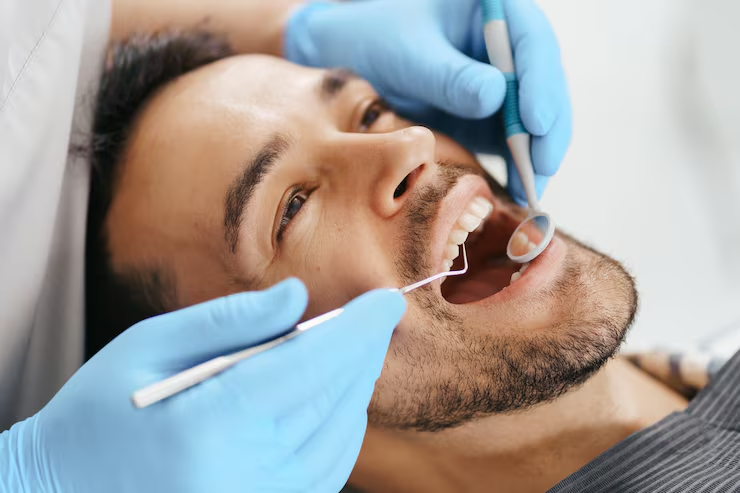
What Private Dental Care Actually Offers — and When It Makes Sense
The decision to see a private dentist is one more people across the UK are actively weighing, particularly as NHS dental availability has become increasingly strained in many areas. But cost is often the first and only factor patients think about when comparing NHS and private care — and that framing misses most of what actually differs between the two. Understanding what private dentistry offers in practice, across a typical year of oral healthcare, gives you a clearer basis for deciding whether it fits your situation.
Access and Continuity
One of the most immediate differences patients notice when switching to private care is the ease of getting an appointment — including for urgent concerns — and the consistency of seeing the same dentist at each visit. NHS practices, which operate under set contract constraints, often have limited capacity for emergency appointments and may rotate patients across multiple dentists in the practice.
Continuity of care matters more than it might seem. A dentist who has treated you for several years holds a comparative record of your gum health, your bite, the condition of existing restorations, and your response to treatment. That accumulation of clinical knowledge is what allows subtle changes to be caught early — rather than identified only once they have progressed to a more serious stage.
The Treatment Range
Private dentistry is not a separate category of clinical practice — it is access to a broader scope of materials, techniques, and treatment options within the same clinical framework. NHS dental contracts cover essential clinical work: examinations, fillings, extractions, and certain types of crown and denture. Private care includes all of that, plus a wider range of cosmetic and restorative options that NHS funding does not extend to.
Tooth whitening, composite bonding, all-ceramic crowns and veneers, Invisalign and other clear aligner systems, and dental implants all fall outside NHS provision. For patients who want any of these treatments, private care is not an optional upgrade — it is the only route.
A Private Dentist Coventry patients use for comprehensive care will typically offer all of these options in-house, which avoids the fragmented experience of receiving basic care at one practice and specialist treatment at another.
Time and Appointment Quality
Private appointments are generally longer than NHS ones. This has a direct clinical effect: there is more time for thorough soft tissue examination, detailed gum assessment, patient education, and unhurried discussion of treatment options. Patients consistently report feeling more involved in decisions about their own care when appointments are not under time pressure.
This is not a criticism of NHS dentists — clinicians working within NHS contracts operate under significant time and financial constraints that are structural, not individual. But it is a real distinction that affects the quality of what is clinically possible in a given appointment.
Cost: Comparing Realistically
The cost of private dental care varies considerably by practice and by the treatments involved. Routine private examinations across the UK typically range from around £50 to £90 per visit, and hygiene appointments from around £60 to £100. These costs are predictable and transparent, which patients often find preferable to the uncertainty of NHS banding (where a course of treatment is charged under a single band regardless of how many elements it includes).
Many private practices offer dental plans — monthly payment schemes that cover examinations and hygiene appointments and provide a discount on any additional treatment. For patients who attend regularly and maintain their care, these plans can make private dentistry cost-effective over a full year.
Dental Anxiety and Private Care
Private practices often devote more structural attention to patients who experience dental anxiety. This can include longer appointment blocks that give anxious patients more time to acclimatise, a quieter waiting environment, and sedation options for those who need them. The ability to consistently see the same dentist also reduces anxiety over time — trust is built with a specific person, not with a practice in the abstract.
Research consistently links untreated dental anxiety with delayed care, which in turn leads to worse oral health outcomes. Addressing anxiety as part of clinical care, rather than treating it as a logistical inconvenience, is both ethically sound and clinically sensible.
Finding a Dental Clinic Coventry Residents Trust
Word of mouth remains one of the most reliable ways to find a high-quality practice. Practices that consistently deliver good patient experiences tend to accumulate long-term patient relationships, which is itself a useful indicator of how they operate. Online reviews can supplement this, but they are most useful when patients describe specifics — the thoroughness of the examination, the clarity of communication, the comfort of the environment — rather than leaving general star ratings.
Conclusion
Private dental care is not a luxury tier of the same basic service — it is a different model of access, scope, and time that has genuine clinical implications. For patients who want proactive, comprehensive oral healthcare with full transparency around treatment options and costs, understanding what private care involves is the necessary first step.
FAQs
Q1. What is typically included in a private dental plan?
Most private dental plans include two examinations per year, two or more hygiene appointments, and emergency cover, often with X-rays included at the routine appointments. Many plans also offer a percentage discount on any additional private treatment required during the year. The specifics vary by practice and plan tier, so it is worth asking for a written breakdown before signing up.
Q2. Can I switch between NHS and private dental care?
Yes. There is no obligation to remain with one type of provision, and you can register privately with a new practice even if you were previously seen on the NHS. Be aware that if you are currently mid-way through an NHS course of treatment, leaving that treatment before completion may affect how charges are handled. A new private practice can advise you on this at your initial consultation.
Q3. Do private dentists have different clinical qualifications?
No. All dentists registered with the General Dental Council hold the same core clinical qualifications regardless of whether they work in NHS or private settings. The difference lies in the scope of treatments available and the appointment structure — not in the fundamental clinical training of the dentist. Additional postgraduate qualifications in areas such as implantology, orthodontics, or oral surgery are a matter of individual professional development and are not specific to either NHS or private practice.
Q4. Is private dental care worth it if I have generally good oral health?
For patients with good existing oral health, the primary benefit of private care is often access and prevention. Regular professional hygiene treatment, thorough examinations with more time allocated, and earlier detection of small issues before they develop into significant problems can reduce the overall cost and complexity of dental treatment over a lifetime — an argument frequently made by clinicians who specialise in preventive dentistry.