
Marine Life You Can See While Diving at Sail Rock in Koh Tao
Sail Rock is widely regarded as one of the most exciting dive sites in the Gulf of Thailand, attracting divers who want to experience richer marine biodiversity and more dynamic underwater conditions. Located between Koh Tao and Koh Phangan, this iconic site offers a completely different experience compared to shallow reef dives around the island.
Known for its vertical rock formation and deep blue surroundings, Sail Rock in Koh Tao is especially famous for the incredible variety of marine life that gathers around it, making every dive feel unique and full of surprises.
A Deep Water Ecosystem Full of Activity
Unlike sheltered training reefs, Sail Rock is an offshore pinnacle that rises dramatically from the seabed, creating a natural magnet for marine life. Nutrient-rich currents flow around the structure, attracting both small reef species and large pelagic fish.
This unique underwater geography is why Sail Rock in Koh Tao is considered one of the most biodiverse dive sites in the region. The combination of depth, current, and structure creates an active ecosystem where predator and reef life interact continuously, offering divers a constantly moving underwater spectacle.
Schools of Large Pelagic Fish
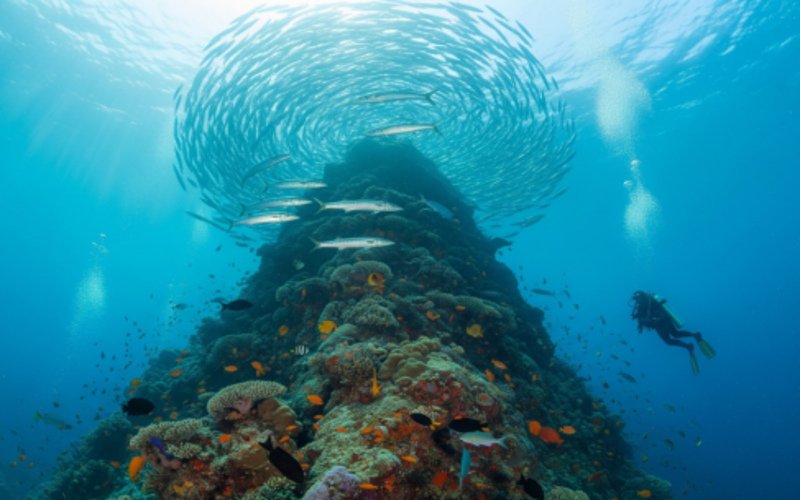
One of the most impressive sights at Sail Rock diving sites is the presence of large schooling fish. Divers often encounter massive schools of barracuda circling the rock in synchronized motion, creating a silver tornado effect in the water column.
Trevally, snapper, and fusiliers are also commonly seen moving in large groups around the pinnacle. These fast-moving pelagic species are one of the main reasons advanced divers return to Sail Rock, as the density and movement of fish create a thrilling and immersive diving experience.
Reef Fish and Coral Ecosystem
While the open water species are dramatic, the reef structure of Sail Rock is equally impressive. The rock is covered in colorful soft corals and hard coral formations that provide shelter for countless smaller fish species.
Divers exploring Sail Rock often spot angelfish, butterflyfish, parrotfish, and damselfish weaving through coral gardens. These reef species add vibrant color and diversity to the dive, balancing the larger pelagic encounters with delicate marine life activity close to the rock surface.
Occasional Whale Shark Encounters
One of the most exciting possibilities at Sail Rock is encountering a whale shark. While not guaranteed, these gentle giants occasionally pass through the area, especially during peak diving seasons.
The chance of seeing a whale shark adds to the legendary status of Sail Rock dives. Even though sightings are rare, the possibility alone attracts advanced divers who want a chance to experience one of the ocean’s most iconic creatures in its natural environment.
Macro Life Hidden in the Rock Formations
Beyond the large and colorful fish, Sail Rock also offers excellent macro diving opportunities. The cracks, crevices, and overhangs of the rock are home to smaller marine creatures that are often overlooked.
Divers may spot nudibranchs, cleaner shrimp, moray eels, and pipefish hiding within the structure. These smaller species add depth to the dive experience, rewarding those who take the time to explore slowly and observe the finer details of the reef ecosystem.
Vertical Chimney as a Marine Life Hub
One of the most famous features of sail rock diving is the vertical chimney swim-through. This natural tunnel is not only an exciting passage for divers but also a hotspot for marine activity.
Fish often gather inside and around the chimney, using it as shelter and a feeding ground. The mix of light filtering through the rock and schools of fish moving through the narrow space creates one of the most visually striking moments of the dive.
Conclusion
Sail Rock is not just a dive site—it is a complete underwater ecosystem filled with movement, color, and life at every level. From massive schools of barracuda to hidden macro creatures, every dive reveals something new. Its unique structure and offshore location make it one of the most diverse marine environments near Koh Tao. For divers seeking a truly memorable experience, sail rock diving offers a perfect blend of adventure, biodiversity, and natural beauty beneath the waves.
FAQs
1.What marine life is most commonly seen at Sail Rock?
Divers frequently see barracuda, trevally, snapper, and various reef fish species.
2.Is it possible to see whale sharks at Sail Rock?
Yes, but sightings are rare and depend on the season and luck.
3.What makes Sail Rock different from other Koh Tao dive sites?
Its offshore location, deep structure, and strong marine biodiversity make it more advanced and dynamic.
4.Are there small marine creatures at Sail Rock?
Yes, macro life such as nudibranchs, shrimp, and moray eels can be found in rock crevices.
5.Do divers need experience to dive at Sail Rock?
Yes, it is recommended for advanced divers due to depth and possible currents.
For More Information Visit:- madfortrends