
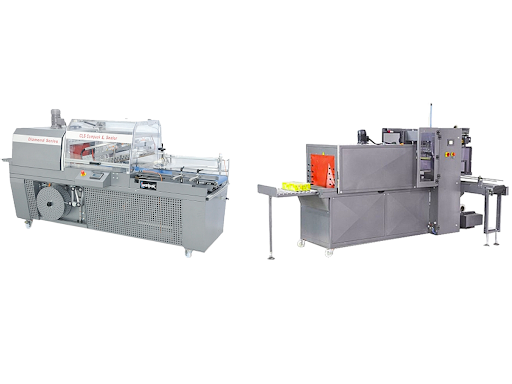
Shrink Film Machine: Understanding the Equipment That Delivers Professional Shrink Wrapping
Shrink wrapping combines two distinct production processes — mechanical film wrapping and thermal film activation — into a single, seamless packaging output. The quality and correct specification of the shrink film machine at the centre of the operation determines the speed, consistency, and finished quality of every package produced — whether the application is retail food packaging, consumer goods presentation, industrial bundling, or e-commerce fulfilment.
The Two-Stage Process
Every shrink film machine operation involves two distinct stages. The first is the sealing stage — where film is wrapped around the product and sealed to form a loose package. The second is the shrink stage — where the sealed package passes through a heat tunnel that activates the film’s thermal memory, causing it to contract tightly around the product. These two stages may be performed by separate pieces of equipment (a sealer and a tunnel) or by a combined unit, depending on the machine configuration and throughput requirement.
The quality of both stages is equally important to the finished result. A perfect seal that enters a poorly set tunnel produces a poor shrink result. A well-configured tunnel cannot compensate for a seal that is inconsistent or structurally weak. Understanding the system as an integrated process — rather than as two independent machines — is the starting point for consistently excellent shrink packaging output.
Sealer Types and Their Applications
The sealing component of a shrink film machine system takes several forms depending on the application:
- L-bar sealer: An L-shaped seal bar that seals two sides of the package simultaneously — the most common configuration for general shrink wrapping
- Side sealer: A continuously running automatic sealer that forms side seals as product flows through — suited to medium and high-volume production
- Impulse sealer: Uses a brief electrical impulse to heat the seal wire — suited to thinner films and lower-volume applications
- Continuous band sealer: A moving belt-driven seal system for high-speed in-line applications
- Sleeve wrapper: Forms a film sleeve around the product group — common in beverage and tray wrapping applications
Shrink Film Specifications
The film used in a shrink film machine system is as important as the machine itself. The three primary film types each have distinct characteristics that affect machine requirements, finished package appearance, and application suitability. Polyolefin (POF) film delivers the best combination of clarity, shrink uniformity, and food-contact compliance — making it the default choice for most retail applications. PVC offers lower cost and good clarity but is not suitable for food contact and requires ventilation during processing. Polyethylene film is preferred for industrial bundling where strength and cost efficiency take priority over visual presentation.
Film gauge — typically measured in microns or gauge — affects both the strength of the finished package and the machine’s seal and tunnel parameter requirements. Thicker films require higher seal temperatures, longer dwell times, and more tunnel heat input to achieve full shrink activation. Operating outside the film’s specified parameter range produces inconsistent results regardless of machine quality. Suppliers who provide application-specific film recommendations alongside equipment — rather than leaving film selection to the buyer — consistently deliver better first-run results and shorter commissioning periods.
Optimising Performance
Getting consistent, high-quality results from a shrink film machine system requires accurate calibration of seal bar temperature, tunnel temperature and airflow, and conveyor speed — all matched to the specific film and product combination being run. Documenting approved parameter settings for each product-film combination and training operators to use these settings consistently produces the most reliable output quality across shifts and operators.
Final Words
Selecting the right sealer, tunnel, and film combination is an investment in packaging quality that pays returns across every pack produced. Facilities ready to explore their options should contact Maripak USA — a specialist packaging equipment provider with the expertise to recommend the right system for any application and to support the installation from commissioning through long-term productive operation.