
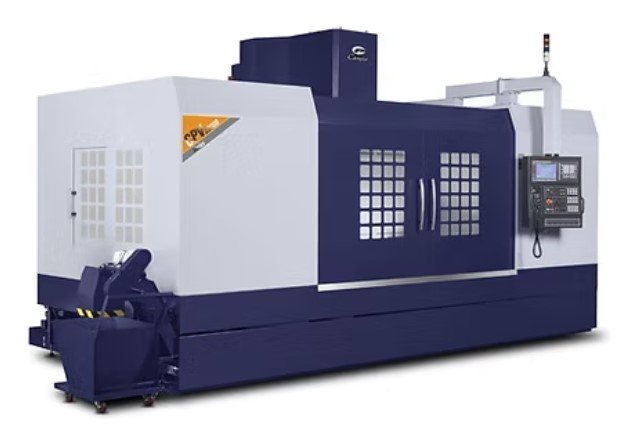
CNC Turning Center Explained: How It Improves Accuracy & Efficiency
In modern manufacturing, precision and efficiency are critical for maintaining competitiveness. CNC turning centers have revolutionized the way components are produced, offering unmatched accuracy and speed. Understanding how a CNC turning center works and its advantages can help manufacturers optimize production and reduce errors.
What Is a CNC Turning Center?
A CNC turning center is a computer-controlled machine designed to rotate a workpiece while cutting, shaping, or drilling it with a stationary tool. Unlike traditional lathes, CNC turning centers are automated and capable of producing complex parts with minimal human intervention. They can handle high-volume production runs with consistent quality, making them a staple in industries such as automotive, aerospace, and electronics.
Key Components of a CNC Turning Center
Understanding the structure of a CNC turning center helps explain its precision:
- Spindle: Rotates the workpiece at varying speeds depending on the material and operation.
- Turret: Holds multiple cutting tools and can rotate to switch tools automatically.
- Control Panel: Allows operators to program cutting paths, speeds, and operations using CNC software.
- Bed: Provides a stable base to minimize vibrations during cutting, enhancing accuracy.
These components work together to deliver a seamless, highly automated machining process.
How CNC Turning Centers Improve Accuracy
Accuracy is one of the most significant advantages of CNC turning centers over manual machining. Several factors contribute to this precision:
Computer-Controlled Operations
CNC turning centers use pre-programmed instructions to control every movement of the machine. This eliminates human errors commonly associated with manual lathes, ensuring each part is identical to the specifications.
High-Quality Tooling
The cutting tools used in CNC turning centers are engineered for durability and precision. Tool wear is monitored and compensated for automatically, further improving consistency and reducing scrap rates.
Stable Machine Construction
The rigid construction of CNC turning centers minimizes vibrations during cutting operations. This stability ensures that every cut is clean and precise, which is particularly important for components with tight tolerances.
Real-Time Monitoring and Adjustments
Advanced CNC turning centers can monitor tool performance and make real-time adjustments to compensate for deviations. This feature ensures parts meet exact specifications, reducing the need for rework.
How CNC Turning Centers Improve Efficiency
Efficiency in manufacturing is not just about speed; it also involves optimizing resources, reducing waste, and streamlining workflows. CNC turning centers excel in all these areas.
Automated Tool Changes
The turret can hold multiple tools and switch between them automatically. This reduces downtime and allows continuous machining without manual intervention.
High-Speed Machining
CNC turning centers can operate at high spindle speeds, allowing faster material removal without compromising precision. This accelerates production and enables manufacturers to meet tight deadlines.
Minimal Operator Intervention
Once programmed, a CNC turning center requires minimal operator involvement. This allows workers to manage multiple machines simultaneously, improving overall productivity.
Consistent Quality
Efficiency is also about reducing defects and scrap. CNC turning centers produce uniform parts every time, which minimizes waste and reduces the time spent on quality control.
Flexible Production
CNC turning centers can be reprogrammed quickly to produce different parts. This flexibility allows manufacturers to switch between production runs without extensive downtime or setup.
Applications of CNC Turning Centers
CNC turning centers are widely used across industries due to their versatility:
- Automotive: Engine components, gear shafts, and custom parts
- Aerospace: Turbine components, structural parts, and precision fittings
- Medical Devices: Surgical instruments and implantable devices
- Electronics: Housings, connectors, and small precision parts
These applications highlight how CNC turning centers combine accuracy and efficiency to meet the demands of modern manufacturing.
Conclusion
CNC turning centers have transformed the manufacturing landscape by delivering high accuracy, repeatability, and operational efficiency. Through automated processes, rigid machine construction, real-time monitoring, and high-speed machining, these advanced systems produce consistent, high-quality components while optimizing production workflows. When integrated with complementary technologies such as CNC vertical machining, manufacturers gain even greater flexibility and precision across complex production requirements.