
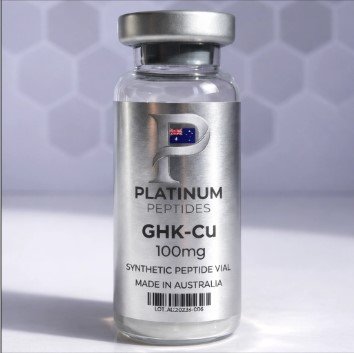
GHK Copper Peptide: A Researcher’s Guide to One of the Most Studied Compounds in Cellular Biology
Among the peptide compounds that have attracted sustained scientific attention over recent decades, the GHK copper peptide occupies a particularly prominent position. Originally isolated from human plasma, this tripeptide-copper complex has been the subject of extensive research across multiple disciplines — from wound healing and skin biology to neurological function and anti-ageing science. For researchers looking to work with a well-characterised compound, GHK-Cu offers a substantial body of published literature and a clearly defined mechanism of action.
The Basic Science Behind GHK-Cu
The GHK copper peptide — formally known as glycyl-L-histidyl-L-lysine copper(II) — functions as a carrier peptide with a high affinity for copper ions. Copper is an essential trace element involved in numerous biological processes, including collagen synthesis, antioxidant enzyme activity, and neurological function. The GHK peptide sequence acts as a natural transport mechanism, delivering copper to cells in a form that can be efficiently utilised.
Research has demonstrated that GHK-Cu levels in human plasma decline significantly with age — from approximately 200 ng/mL in young adults to much lower concentrations in older individuals. This age-related decline has prompted considerable research interest in the compound’s potential role in cellular maintenance and repair.
Key Areas of Research Interest
The breadth of research into the GHK copper peptide reflects the compound’s wide-ranging influence on cellular biology. Published studies have investigated its effects across numerous systems:
- Wound healing: GHK-Cu has been shown to accelerate the healing of skin wounds in animal models through mechanisms involving collagen synthesis stimulation
- Skin biology: Research has examined the compound’s effects on dermal fibroblast activity and extracellular matrix remodelling
- Hair follicle biology: Studies have investigated GHK-Cu’s influence on follicle size and hair growth cycles in research models
- Gene expression: Genome-wide studies have suggested that GHK-Cu may influence the expression of a significant number of human genes
Sourcing for Research
Researchers looking to buy peptides in Australia have access to high-quality GHK-Cu through established research-grade suppliers. The compound is available in lyophilised powder form and requires reconstitution before use in research applications.
All GHK copper peptide products sourced for research purposes are intended strictly for laboratory and scientific research use and are not for human consumption. Researchers should verify purity certificates and third-party testing documentation before incorporating any peptide compound into their experimental protocols.
Final Words
The GHK copper peptide remains one of the most extensively studied and scientifically compelling compounds in the research-grade peptide catalogue — a reliable subject for researchers working at the intersection of cellular biology, ageing science, and molecular medicine.