
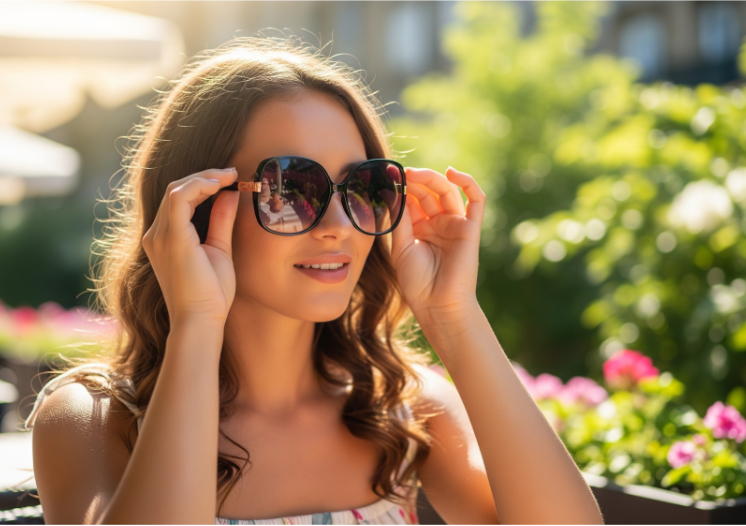
How Do Women Choose the Best Sunglasses for Everyday Wear?
The right pair of sunglasses for females does much more than complete an outfit. Quality sunglasses protect the eyes from harmful ultraviolet radiation, reduce glare, and improve visual comfort in bright environments. At the same time, they are powerful style accessories that frame the face and reflect personal taste. With countless designs and lens options available, understanding how to evaluate womens sunglasses helps make confident, long‑lasting choices.
Why UV Protection Matters for Women’s Sunglasses
Ultraviolet (UV) radiation from the sun can contribute to long‑term eye problems, including cataracts and damage to delicate eye structures. Effective UV protection sunglasses block 99% to 100% of UVA and UVB rays. When comparing stylish sunglasses for women, it is important not to rely only on lens darkness; darker tints do not automatically indicate better UV protection.
Look for clear labeling or product descriptions confirming full UV coverage. This information may appear as “UV400” or “100% UV protection.” Reliable optical retailers provide these details for each pair, helping women choose options that prioritize eye health as well as aesthetics.
Matching Sunglasses to Face Shape
Face shape is a useful guide when selecting flattering sunglasses for females. Women with round faces often find that angular or rectangular frames provide balance, adding definition to softer facial lines. Those with square faces may prefer round or oval lenses that soften prominent jawlines.
For heart‑shaped faces, styles that are wider at the top than the bottom help harmonize proportions. Oval faces generally suit many frame shapes, offering broad flexibility. Trying different silhouettes reveals which designs highlight features most attractively while still fitting comfortably.
Lens Tints and Their Practical Uses
Lens color affects how women see the world through their sunglasses. Grey tints maintain natural color balance and are suitable for general outdoor use. Brown or amber lenses enhance contrast, which can be useful for driving or outdoor sports. Green tints strike a balance, offering comfort and relatively true color perception.
Polarized lenses deserve special attention. These lenses reduce glare from reflective surfaces such as water, glass, and roads, making them ideal for driving, beach activities, and time spent near water. While polarization is not essential for every wearer, it significantly improves visual comfort in bright, reflective conditions.
Frame Materials and Everyday Durability
Frame material determines how sunglasses feel and how long they are likely to last. Lightweight metal frames offer a refined, minimalist look, suitable for women who prefer subtle accessories. Acetate and other high‑quality plastics provide rich colors and patterns, from classic tortoiseshell to bold modern shades.
Women who lead active lifestyles may prefer flexible, impact‑resistant materials that can handle frequent use. Sturdy hinges, quality screws, and well‑constructed temples reduce the likelihood of breakage. Comfortable nose pads and well‑balanced weight distribution help ensure sunglasses can be worn for extended periods without discomfort.
Style Choices: Classic vs. Trend‑Led
Some womens sunglasses designs never go out of style. Aviators, wayfarer‑inspired shapes, and softly rounded rectangles remain popular season after season. Choosing a classic design in a neutral color such as black, brown, or gold ensures versatility across outfits and occasions.
Trend‑led styles—oversized frames, geometric shapes, or vivid colors—allow women to express personality and follow current fashion. Many find it useful to own at least one classic pair for everyday wear and one more expressive pair for weekends, holidays, or special events. This approach balances practicality with playful self‑expression.
Fit, Comfort, and Practical Details
Good‑looking sunglasses must also fit well. Frames should rest securely on the nose without sliding, and temples should sit comfortably over the ears without pinching. Lenses should be large enough to fully cover the eyes, minimising stray sunlight from above or the sides.
Women who drive frequently may prioritise frames that sit well above or below hairstyles without interfering. For those who wear prescription glasses, prescription sunglasses, or clip‑on options, ensure clear vision and sun protection.
Conclusion
Choosing the best sunglasses for females involves more than simply following trends. By considering UV protection, face shape, lens tints, materials, and overall fit, women can select sunglasses that safeguard their eyes while enhancing their style. Whether opting for classic womens sunglasses or fashion‑forward designs, thoughtful selection results in comfortable, protective eyewear suitable for daily use under bright skies.