
What Makes A Custom Deck Design Truly Work For Everyday Living?
A custom deck design is ultimately about how your household will use outdoor space, not just about square footage. A deck can act as an outdoor dining room, a lounge, a play area, or a transition zone between the house and garden. When form and function are considered together, custom wood decks become an extension of the interior rather than a separate platform tacked onto the facade.
Starting With Purpose And Flow
Before drawing any lines, it helps to define what the deck is for. Do you want a place for weekday meals, weekend gatherings, quiet reading, or all of the above? Clear priorities inform decisions about size, layout, and how the deck connects to doorways and interior rooms.
Flow is just as important as purpose. Well‑designed decks allow easy movement between inside and outside, without awkward steps or narrow pinch points. The way people will move from kitchen to dining area, from seating to garden, or from one level to another should shape the overall plan.
Working With Site Conditions
Residential deck builders often begin by studying site conditions: existing grade, views, sun exposure, and relationships to neighbouring properties. A deck on a sloping site might need multiple levels or steps; one on a flat site may simply extend a ground‑floor living space outward.
Orientation to the sun influences whether parts of the deck will be in full sun, partial shade, or mostly shade through the day. These patterns, combined with prevailing breezes, can suggest where to place seating areas, whether to consider a pergola or roof, and how to arrange planting beds around the deck for comfort.
Choosing Deck Size And Zones
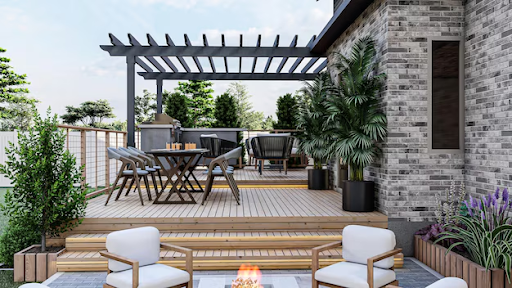
Custom deck design makes it possible to create distinct but connected zones on a single structure. For example, one area might be sized for a dining table and chairs, another for lounge seating, and a third for a grill or outdoor kitchen.
Rather than relying on one large open rectangle, subtle changes in direction, built‑in benches, or planters can define these zones while maintaining visual continuity. Dimensions should be generous enough to accommodate furniture and circulation without feeling oversized or echoing.
Integrating Levels And Transitions
On sites with changing elevations, multiple deck levels can help the structure step down gracefully toward the yard. Each level can serve a slightly different purpose or atmosphere. The transitions between levels—stairs, wide steps that double as seating, or short runs with landings—are opportunities to create informal sitting spots and viewing points.
Carefully placed steps also help manage the shift from deck to lawn or garden, making it easier to move barefoot or carry items between spaces.
Material And Detail Choices
In custom wood decks, details such as railing design, board orientation, and fascia treatment influence both appearance and experience. Horizontal elements can emphasise width or length; vertical elements can accentuate height and connection to the landscape.
Choice of wood, finish colour, and any integration of metal or glass railings should align with the home’s architecture and the broader landscape style. Simple, well‑proportioned details tend to age better and support small updates or furniture changes over time.
Considering Privacy And Views
Decks are often elevated, which can enhance views but also increase visibility to and from neighbouring properties. Custom design allows for strategic privacy: solid or semi‑transparent railings, planters, trellises, or changes in deck height can screen certain angles while preserving key views.
It’s helpful to stand at the proposed deck height and look outward and inward, imagining sightlines at different times of day. Decisions about railing types and planting positions become clearer when grounded in these real perspectives.
Planning For Future Additions
Even if you start with a simple deck, designing with future possibilities in mind can save effort later. Leaving logical attachment points for pergolas, shade structures, or outdoor kitchens allows you to expand in stages. Considering wiring or conduit routes for future lighting or power outlets also avoids disruptive retrofits.
Residential deck builders can often help identify which parts of the structure might carry additional loads later, such as roofed sections or heavy planters.
Conclusion
A custom deck design that genuinely supports everyday living grows out of an understanding of how you use your home, how your site behaves, and what kinds of outdoor experiences you want to create. By shaping zones, integrating levels, managing privacy and views, and planning for future additions, custom wood decks become flexible, long‑term assets rather than one‑season experiments. Over time, a well‑designed deck becomes part of the daily rhythm of the household—somewhere people naturally gravitate whenever the weather allows.