
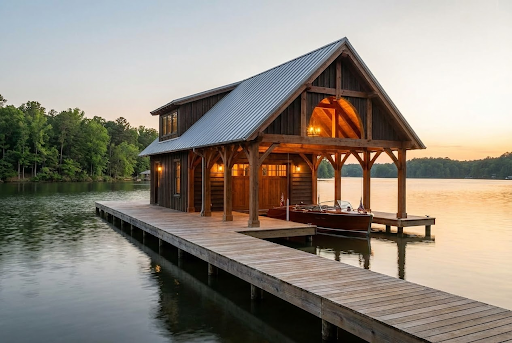
Custom Timber Boat Houses: Protecting Watercraft While Enhancing Waterfront Character
Custom timber boat houses combine practical boat protection with the visual warmth of natural wood, creating a focal point along the shoreline. Beyond acting as a simple shelter, a well-designed boat house can provide storage, covered docking, seating areas, and even upper-level decks for viewing the water.
Unlike generic metal structures, timber boat houses can be tailored to the specific site, water conditions, and architectural style of nearby buildings. This customisation allows owners to protect their investment in watercraft while also elevating the overall look of the waterfront.
Protection from Sun, Weather, and Water Exposure
Continuous exposure to sun, rain, waves, and wind accelerates wear on hulls, upholstery, and equipment. A boat house with a solid timber frame and roof shields the vessel from UV damage, precipitation, and airborne debris. This reduces maintenance, slows fading and cracking, and extends the boat’s service life.
In climates with seasonal storms or harsh winters, additional wall panels, doors, or lift systems can further isolate the boat from the elements. Engineered timber framing ensures that loads from snow, wind, and wave action are safely transferred to foundations or piers.
Structural Considerations in Marine Environments
Waterfront construction introduces unique structural demands. Posts and foundations may be located in or near the water, requiring attention to corrosion, decay, and movement. Heavy timber, combined with appropriate fasteners and protective treatments, performs well in these conditions when properly detailed.
Designers must consider:
- Wave and ice loads
- Uplift from wind
- Potential impact from floating debris
- Variable water levels
A custom approach allows all these factors to be addressed in a coordinated structural solution, rather than relying on generic assumptions.
Dock Integration and Boat Access
A boat house rarely stands alone; it typically integrates with docks, piers, or boardwalks. The arrangement of slips, walkways, and platforms determines how easy it is to approach, tie up, and board the boat. Clear access paths, adequate fendering, and appropriate clearances around the vessel all contribute to safe daily use.
Timber boat houses can also incorporate swim platforms, kayak or paddleboard storage, and seating areas at the water’s edge. When designed holistically, the structure becomes a multi-use waterfront hub.
Architectural Style and Shoreline Aesthetics
Because boat houses are prominent visual elements, especially on lakes and rivers, their appearance matters. Timber framing allows for gables, bracket details, exposed rafters, and other features that echo nearby cottages or homes. Matching roof pitch, color, and trim creates a consistent architectural language across the property.
In many communities, design sensitivity also aligns better with local regulations and neighborhood expectations. A thoughtfully designed timber structure is less likely to be perceived as intrusive or industrial than metal alternatives.
Storage, Security, and Organization
Beyond sheltering the boat itself, a boat house can include enclosed areas for storing life jackets, maintenance equipment, fishing gear, and seasonal accessories. Lockable cabinets or rooms protect valuable items and reduce clutter on the dock.
Raised storage and ventilation strategies help control moisture and prevent mold or mildew on stored items. With sufficient headroom, some boat houses can also accommodate boat lifts, reducing hull fouling and simplifying maintenance.
Upper-Level Decks and Viewing Platforms
Where regulations and structural conditions allow, an upper-level deck or viewing platform can be built above the boat slip. Heavy timber framing naturally supports these additional loads. This elevated space offers:
- Unobstructed views over the water
- Outdoor dining or lounge areas
- A vantage point for watching swimmers or nearby activities
Railings, stair placement, and wind exposure all need careful attention, ensuring that the upper level feels safe and comfortable.
Materials, Finishes, and Longevity
Marine environments demand robust materials. Durable timber species and proper treatment of posts in contact with water or soil are critical. Finishes must be chosen with both UV exposure and moisture in mind, and may need more frequent renewal than inland structures.
Hardware should be corrosion-resistant, and connections need to accommodate movement from temperature and moisture changes. With these considerations addressed, a timber boat house can remain functional and attractive over many seasons.
Regulatory and Environmental Considerations
Shoreline development is often subject to regulations designed to protect ecosystems and navigation. Setbacks, height limits, and restrictions on over-water structures can influence boat house design. Early coordination with local authorities and permitting bodies helps avoid delays and redesigns.
Environmentally conscious design may include minimizing shading on aquatic vegetation, limiting footprint in sensitive zones, or selecting materials with lower ecological impact. Timber’s renewable nature can be an advantage when balanced with responsible sourcing.
Year-Round Use and Flexibility
In many locations, boat houses serve different roles at different times of year. During boating season, they function as operational hubs; in the off-season, they act as secure storage. Some owners also use enclosed portions for winter equipment, fishing gear, or even small workshops.
Custom design allows the structure to adapt to these shifting needs without compromising its primary role as a protective shelter.
Conclusion
Custom timber boat houses provide more than just a roof over a boat. They integrate protection, storage, access, and architectural character into a single waterfront structure tailored to the site. When carefully planned and engineered, they enhance both the longevity of watercraft and the overall enjoyment of the shoreline.